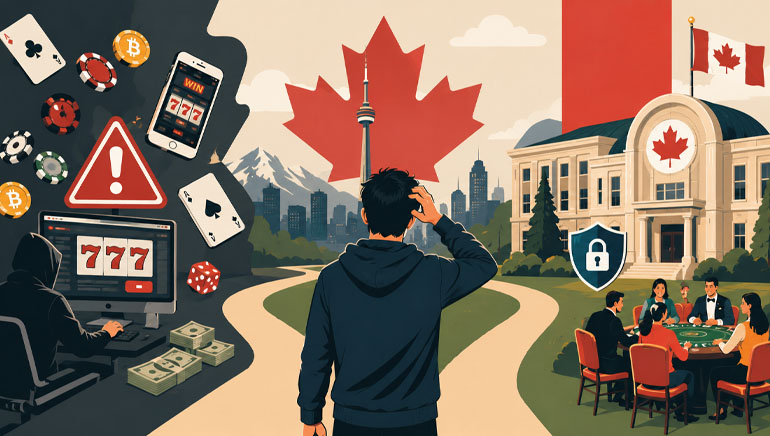
Does Trudeau’s resignation threaten the future of Bill S-269? We examine the background of the bill’s passage to the House, the likely effect of prorogation on its future, and the calls for a ban on sports betting advertising in Canada.
Amidst the turmoil and uncertainty surrounding Canadian Prime Minister Justin Trudeau's announcement on January 6th of his intention to resign once the Liberal Party has chosen his successor, one question remains unanswered for Canada’s online sports betting enthusiasts: How does this news impact the national sports betting advertising bill?
Trudeau said that his announcement was necessary to clear the legislative standstill, noting that “despite best efforts to work through it, Parliament has been paralysed for a month.”
He added that Governor General Mary Simon had granted his request to prorogue Parliament until March 24th to allow his party to hold a leadership contest. The legislature had been scheduled to reconvene on January 27th.
The disruption of parliament caused by his resignation will result in the cessation of all parliamentary business and the suspension of all legislation before the House of Commons and the Senate until the next session begins.
That means that Bill S-269, requiring the Minister of Canadian Heritage to develop a national framework for regulating sports betting advertising nationwide, would need to be revived to have a future.
Under Canadian federal law, prorogation means that bills that have not received Royal Assent are “entirely terminated” and must be reintroduced to be taken up in the new session.
However, a provision allows bills to be reinstated at their most recent stage if a motion to do so is agreed upon under certain conditions. This means that Bill S-269 isn’t necessarily dead, but with parliament not due back for almost three months and sports betting unlikely to be a front-of-mind issue when it does return, the outlook isn’t certain.
Prorogation will not affect the discussion on the legality of international liquidity in Ontario online gaming, awaiting a decision from the Ontario Court of Appeal due soon.
In November 2024, the proposed new Bill S-269, the 'National Framework on Advertising for Sports Betting Act', was held up in the House of Commons in Ottowa over a privilege debate involving access to unredacted documents.
Bill S-269 had cleared the Senate earlier but was mired in quicksand awaiting the House of Commons's first reading, the first page in the final chapter of getting Royal Assent for the bill, which will make it law. They hoped they would push it through before the House adjourned on December 17th for the Christmas recess, but the bill remains in limbo.
The bill calls for the Canadian Heritage Minister, Pascale St-Onge, to develop a new national framework based on “reasonable limits” for sports betting advertising, including the content of those ads, their placement when they are run, and the volume of advertising allowed. The Minister then began a dialogue with provincial lawmakers, First Nations, and gaming regulators to set the standards.
A ban on using athletes and celebrities in online gambling ads, including sports betting, is in effect in Ontario. Still, some advocates are calling for a nationwide ban on online gambling bonus commercials to better protect children, the youth and vulnerable persons across Canada.
Gambling on sports is not new. However, as soon as the federal government legalised single-game sports betting in 2021, advertisements for betting during hockey games on social media apps and the internet became widespread.
Former Olympian Bruce Kidd, professor emeritus of sports policy at the University of Toronto, said research from multiple countries had shown that these ads persuade young people to gamble.
Researchers at Ipsos Mori and the University of Stirling published a report in 2020 after examining the impact of gambling marketing and advertisements on vulnerable groups in the UK. It found that those exposed to such advertising over one month, specifically those in the age groups from youth up to 24 years old, had an increased likelihood of betting in later life, with some developing a gambling problem.
Canadian Gaming Association President and CEO Paul Burns said he understands concerns about gambling advertising. However, he also points out that there are already “robust” standards surrounding sports betting advertisements, the image they project, and even the ages of actors used to limit or outright prevent appeal to a younger audience.
Burns went on to say that leagues and broadcasters had also implemented policies to address legislative concerns and enhance their fans' safety.
The debate over sports betting advertising will continue long after the House of Commons reconvenes and the fate of Bill S-269 is finalised.


 Blackjack
 Roulette
 Slots
Slots Video Poker
 Baccarat
 Poker
Poker