Senators are calling for a ban on sports gambling advertisements, referring to similarities to tobacco ads back in the past. The opposition believes the restrictions could drive bettors to foreign operators.
Sports betting is growing more popular by the day, with more people developing an interest. This is especially thanks to the surge in online sports betting and, of course, betting promotions.
While this is a big bonus point for players, it is also a cause for growing concern. This is why Canadian Senators are now eagerly gunning for a nationwide ban on sports betting advertisements.
The campaign was spearheaded in late November 2025 by Canadian Senators Percy Downe and Marty Deacon. The duo urged Prime Minister Justin Trudeau to direct the Canadian Radio-Television and Telecommunications Commission (CRTC) to ban all sports betting advertisements. Their letter is backed by 40+ senators and highlights the large number of gambling ads currently saturating Canadian sports broadcasts.
A CBC Marketplace investigation showed that gambling messages now make up about 21% of the average sports broadcasts.
Senators argue that the situation mirrors the debate over tobacco advertising. And just as Canada had once banned cigarette commercials to protect public health, so too should gambling ads be restricted to prevent any long-term damage.
One of the greatest concerns among mental health professionals is how these ads are impacting younger audiences. According to Halifax-based therapist Elizabeth Stephen, early exposure to gambling promotions can normalise betting behaviour among the young who are still developing their decision-making skills.
One thing that can’t be said is that Canada lacks effort in prioritising player safety. In terms of regulations, Canada has already banned sports celebrities from appearing in gambling ads, but critics believe this is not enough.
In the meantime, the Parliament is considering Bill S-211, which would create a national framework for sports betting advertising. The bill stops just short of a full ban but implements tighter controls.
According to MP Sean Casey, lawmakers are underestimating the surge in advertising that came with the legalisation of single-event betting.
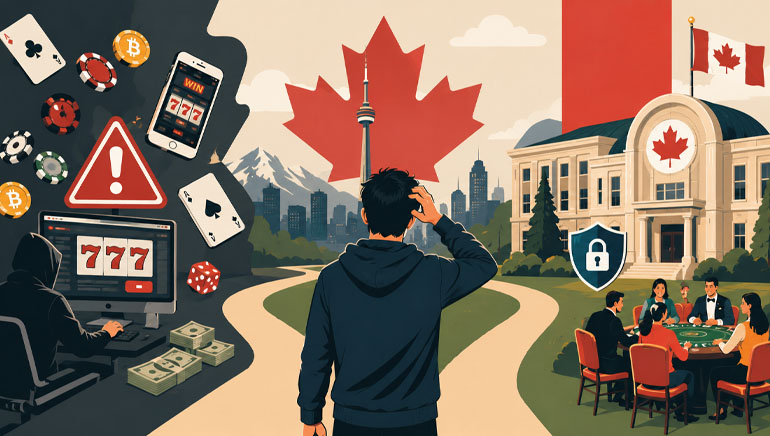
The current debate is focused on whether or not Canada should regulate the number or volume of ads or choose to eliminate them all in one go. Those who suggest a ban are clear in their opinion that the harm is increasingly clear. Opponents to the ban, however, state that such restrictions could undermine the regulated industry and move players towards unlicensed platforms.
Single-event sports betting was legalised back in August 2021. It became a landmark change that made it possible for provinces to regulate and license operators. Ontario was quick to launch its iGaming framework in April 2022.
Ontario’s regulatory framework is internationally considered one of the most open and competitive. Over 70+ casinos are licensed and regulated, which include some of the most impressive operators like DraftKings and FanDuel.
Of course, legalisation led to advertising being a main focus with sports broadcasts, billboards, and digital platforms all flooded with promotions from gambling operators. Before the ban, celebrity endorsements played a big role in drawing attention.
And critics strongly believed that the normalisation of gambling through constant advertising is fuelling risky behaviour. The problem gambling rates are rising, especially among young men. And mental health professionals have warned that the ease of access, paired with aggressive marketing, is creating the perfect opportunity for breeding addiction.
Other provinces are not as open to gambling as Ontario. British Columbia and Quebec, for example, operate government-run platforms limiting private competition. The patchwork system is a reason for inconsistencies in regulation and consumer protection across the country.
Senators calling for a ban have raised the question of how Canada should balance the risks and benefits of a regulated gambling industry. Of course, there are economic benefits such as the increase in tax revenue and job creation.
There is also consumer protection in place that ensures that operators meet standards, security, and responsible gambling. The great concern is that a lack of advertisement can lead to players opting for unlicensed offshore platforms.
In terms of public health, the biggest concern is the impact on the vulnerable, especially as gambling addiction numbers continue to grow.
The proposal has sparked a national conversation about the role of gambling within Canadian society. Those who support the bill argue that public health must take precedence over commercial interests. At the same time, the opposing parties state that overregulation could lead to bettors being driven underground.
The fact of the matter is that the decision will not only impact the future of sports betting advertising but also the relationship in general between sports, gambling, and entertainment.
Find the best online casinos in Canada. Read reviews for our trusted online casinos, grab generous welcome offers, and start playing.


 Blackjack
 Roulette
 Slots
Slots Video Poker
 Baccarat
 Poker
Poker