Canada’s regulated gambling framework is evolving as stablecoins are more clearly positioned within the country’s financial system, with potential implications for licensed operators and players across the online gambling market.
Stablecoins are becoming part of Canada’s changing financial landscape, while the country’s online gambling market is also moving towards greater regulation.
Canada’s new Stablecoin Act creates a federal framework for fiat-backed stablecoins, with the Bank of Canada responsible for supervising non-financial institutions that issue them to Canadians. The rules include reserve requirements, redemption at par and safeguards around governance and data security.
That creates an interesting question for the gambling industry. Could clearer rules around stablecoins help push more online gambling activity towards licensed operators?
Stablecoins are digital assets designed to maintain a stable value against an underlying asset, such as a national currency. Fiat-backed versions can be linked to currencies including the Canadian or US dollar.
Canada’s new framework is intended to bring greater oversight to their issuance. Under the Stablecoin Act (or “Stablecoin Framework” as the government refers to it ), non-financial issuers must register with the Bank of Canada and maintain reserves of high-quality liquid assets equal to the value of the stablecoins they issue. They must also provide a redemption policy allowing holders to redeem their stablecoins at par.
The legislation received Royal Assent as part of Bill C-15 on March 26, 2026. The federal government says supporting regulations are now being developed, with the framework expected to come into effect in 2027.
For online casino gaming, the significance is potentially less about the coins themselves and more about the payment environment surrounding them.
Canada already has a substantial regulated online gambling sector, although the picture differs from province to province.
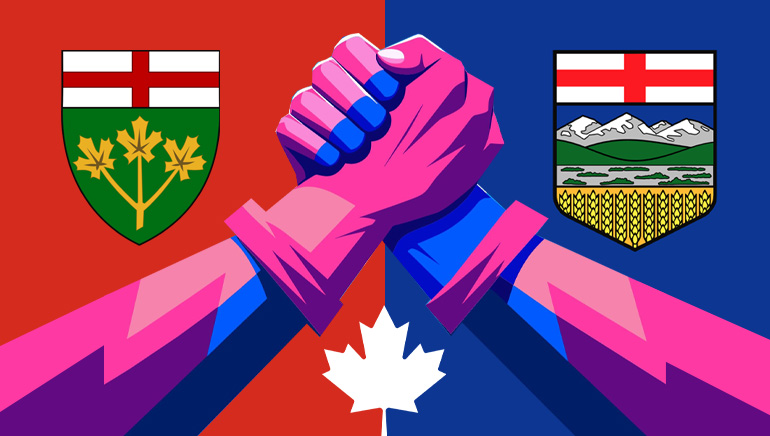
Ontario, for example, operates a regulated private-sector iGaming market through iGaming Ontario. As of September 1st, 2026, its official directory listed 49 regulated operators and 84 gaming websites.
Alberta’s regulated private iGaming market launched on July 13, 2026, with operators required to register with Alberta Gaming, Liquor and Cannabis and enter into a commercial agreement with the Alberta iGaming Corporation.
The Alberta government estimates that unregulated operators previously accounted for about 70% of the province’s iGaming market. Its stated aim is to move more gambling activity into a regulated environment offering stronger player protections.
This is where stablecoins could become relevant. If regulated digital payments become easier to use and more trusted, they could eventually make licensed gambling platforms more attractive to players who value fast and convenient payment options.
Canada’s federal stablecoin framework does not give an online casino permission to operate. Gambling remains governed separately under federal and provincial rules. This is a very important point, and the same applies to payment methods.
A regulated stablecoin does not automatically mean a regulated casino can accept it. Individual gambling operators still need to comply with the rules in the province where they operate, while payment providers and platforms have their own obligations.
There is also a practical issue. A player might be able to move a stablecoin quickly, but that does not necessarily mean a gambling withdrawal will be instant. Identity checks, operator processing times, payment conversions, and banking procedures can still create delays.
Stablecoins could reduce some payment friction without removing every obstacle between a player and a regulated gambling site.
The bigger issue may, however, be whether Canada can persuade more players to choose regulated gambling platforms instead of offshore or unlicensed alternatives.
Canadian authorities already recognise the popularity of unlicensed offshore gambling as a regulatory and financial risk. The federal government's 2025 assessment says unlicensed offshore gambling can expose customers to greater risks and notes that virtual currencies are increasingly used by unlicensed sites. That makes payment regulation an important part of the wider picture.
However, players do not choose gambling sites solely because of the payment method. Game selection, bonuses, registration, withdrawal times, trust, availability, and the overall user experience can all influence where they play.
Canada’s stablecoin rules could eventually give licensed gambling operators access to a more clearly supervised digital payment environment.
The expansion of regulated gambling markets, particularly in provinces such as Ontario and Alberta, could provide another piece of the puzzle. But whether those developments actually redirect significant gambling money from offshore sites into regulated markets will depend on what happens next.
For now, Canada has created the regulatory framework. The real test will be whether the combination of safer digital payments and more regulated gambling choices changes where players actually spend their money.
Are you interested in playing online casino games or joining a sportsbook in Canada? Online Casino Reports has the lowdown on the latest bonuses, popular payment methods and top features to get you started today!


 Blackjack
 Roulette
 Slots
Slots Video Poker
 Baccarat
 Poker
Poker